The modern food system is a marvel of efficiency, but that efficiency often comes at a steep moral and physical price. While meat and dairy have been staples of the human diet for millennia, the transition from pastoral farming to Concentrated Animal Feeding Operations (CAFOs) has fundamentally altered the biological and ethical landscape of what we eat.
Understanding the journey from farm to fork requires looking past marketing labels and examining the systemic realities of modern agriculture.
1. The Life of Industrial Cattle: A Cycle of Stress
In the pursuit of high-yield production, the natural behaviors of cattle are often suppressed in favor of intensive confinement.
- Social Isolation: Cattle are naturally herd-oriented. In industrial settings, they face cramped conditions with little access to pasture, leading to “stereotypies,” that is abnormal, repetitive behaviors caused by chronic frustration.
- The Dairy Cycle: To maintain production, dairy cows are kept in a near-constant state of pregnancy. Calves are typically removed within hours of birth, causing significant distress for both mother and offspring.
- Physical Alterations: Procedures like dehorning or tail-docking are frequently performed without anesthesia to prevent injuries in crowded pens.
- Digestive Distress: As ruminants, cattle are designed to eat grass. In feedlots, they are transitioned to high-starch grain diets to accelerate weight gain, frequently leading to metabolic acidosis and the need for routine antibiotics.
2. The Viral Connection: Bovine Leukemia Virus (BLV)
One of the less-discussed risks in modern dairy is the prevalence of Bovine Leukemia Virus (BLV). BLV is a retrovirus that affects the immune system of cattle; while many are asymptomatic, a percentage develop malignant lymphosarcoma (leukemia).
The Human Risk: BLV spreads rapidly in industrial farms through shared equipment and “pooled” colostrum. While the industry maintains that pasteurization kills the virus, recent genomic studies have detected BLV DNA in human breast tissue and blood.
While a causative link to human cancer is still being debated, the high prevalence of the virus in industrial herds (often 80% to 90% in large U.S. operations) raises significant public health questions regarding under-processed dairy.
3. Systemic Risks: Antibiotics and Hormones
Modern farming creates biological risks that extend directly to the consumer:
| Issue | Impact |
|---|---|
| Antibiotic Resistance | Roughly 70% of medically important antibiotics in the U.S. are used on livestock. This practice is a primary driver of “superbugs” resistant to human medicine (Link). |
| Growth Hormones | rBGH is used to increase milk yield, which elevates levels of IGF-1 (Insulin-like Growth Factor-1). |
How IGF-1 Affects the Body
Unlike some hormones, IGF-1 is not destroyed by pasteurization and can survive digestion.
- Fuel for Growth: In adults, high levels of IGF-1 can act as “fuel” for existing microscopic cancer cells.
- Inhibiting Repair: It inhibits apoptosis (programmed cell death), the body’s way of killing off mutated cells before they become tumors.
- Epidemiological Links: Studies have linked high circulating IGF-1 to increased risks of breast, prostate, and colorectal cancers (Link).
4. The Industrial Reality for Chickens
Recent reports from 2025 and 2026 highlight the extreme biological manipulation of poultry:
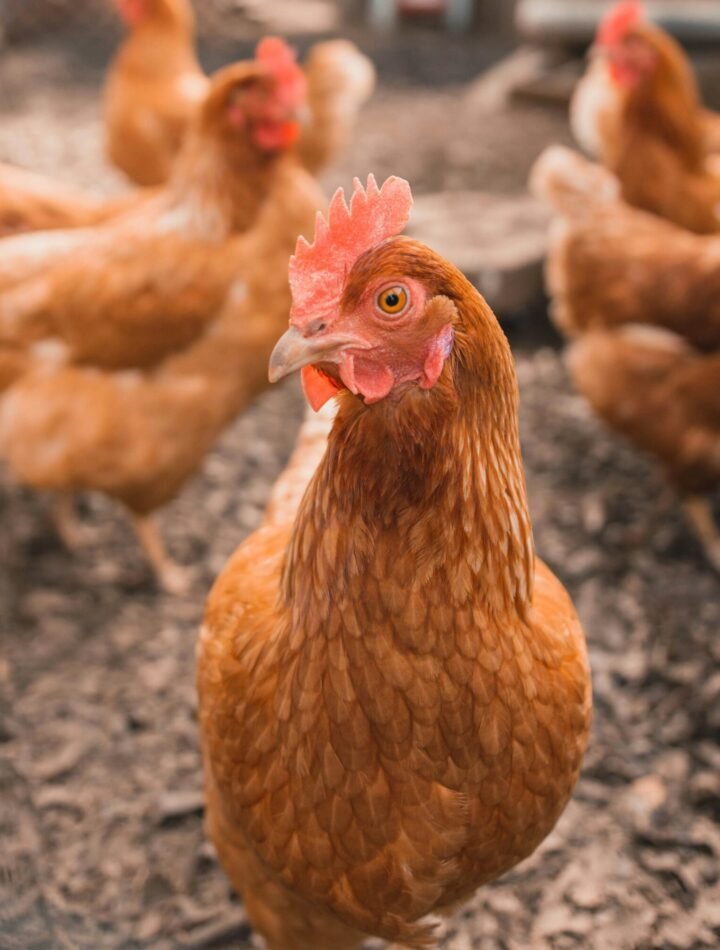
- “Frankenchickens”: Broiler chickens are bred to grow so fast that their skeletons often cannot support their weight, leading to heart failure and leg deformities.
- The Ammonia Environment: Living atop their own waste in high-density sheds causes painful ammonia burns on their skin and respiratory tracts.
- The Hatchery Secret: In the egg industry, male chicks are considered “waste.” Approximately 300 million are destroyed annually shortly after hatching via maceration or gassing.
5. Compassion on the Plate: Why Every Meal Matters
You don’t have to be a “perfect” vegan to make a profound difference. Compassion is a practice, not a destination.
- The Compound Effect: If a family of four skips meat just two nights a week, that’s over 400 meals a year that didn’t require industrial confinement.
- Mindful Sourcing: Choosing local, transparent sources puts pressure on industrial giants to change.
- The “Vegan-Curious” Path: Practicing “Meatless Mondays” isn’t failing; it is succeeding at being a conscious consumer.
6. Final Thoughts: Informed Choice as the Path Forward
Moving toward a plant-based lifestyle is a decision to step away from the health risks and ethical stressors inherent in modern industrial farming. Every plant-based meal is an opportunity to prioritize long-term health, reduce the demand for factory farming, and align our plates with a more sustainable way of living.
Further Readings:
Antibiotics Overuse in Animal Agriculture: https://ajph.aphapublications.org/doi/full/10.2105/AJPH.2015.302870
IGF-1 and cancer risk studies: https://academic.oup.com/jcem/article/108/10/e1092/7124430 (PDF Download)
Chicken welfare: https://www.worldanimalprotection.org/globalassets/pdfs/reports/english/the-pecking-order-2025.pdf